Save up to 20% today!
How Cybercab Can Improve Everyday Life for Seniors
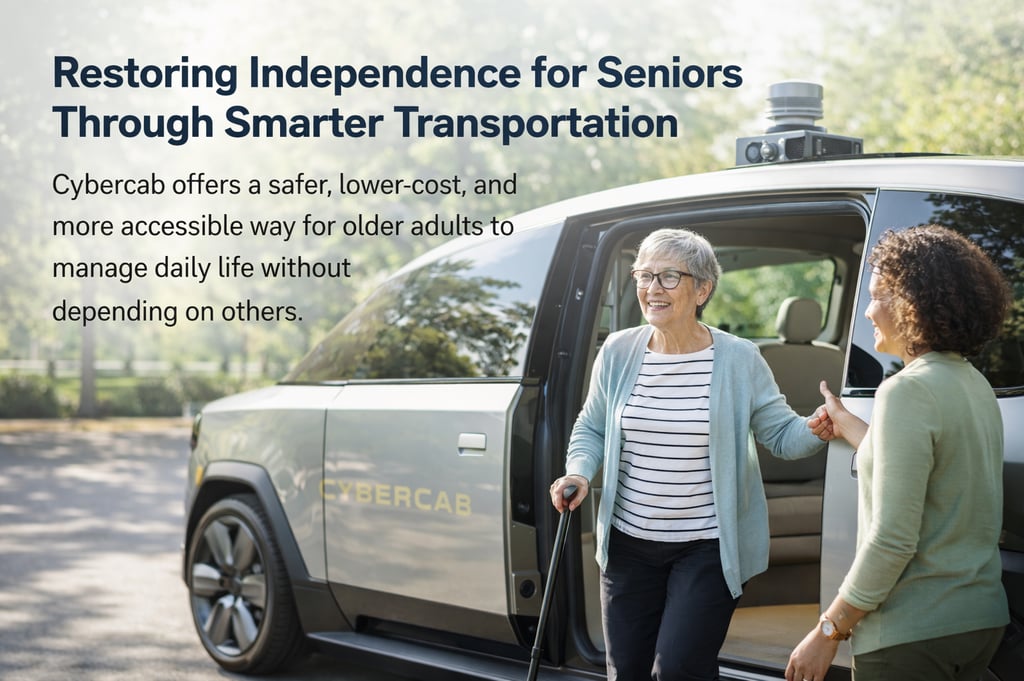
Cybercab offers a safer, lower-cost, and more accessible way for older adults to manage daily life without depending on others.
TRANSPORTATION
Jim Kernodle
3/27/20265 min read
Restores Independence and Reduces Social Isolation
Seniors who can no longer drive (or feel unsafe doing so) regain the ability to handle errands, visit friends/family, attend events, or simply get out without relying on caregivers, family, or limited public transit. The app lets users (or caregivers on their behalf) request rides with personalized settings like climate control, seating, and music—pre-adjusted before pickup. This promotes mental health, reduces depression linked to immobility, and supports “aging in place” rather than premature institutionalization.
Affordable Transportation for Fixed Incomes
Many seniors live on Social Security or limited budgets, where traditional taxis, rideshares with drivers, or paratransit services are expensive or unreliable. Cybercab’s low operating costs and fleet model could make rides far cheaper than car ownership or current alternatives.
Speculation around senior-friendly pricing (e.g., “ride for less” options) could further help those on fixed incomes, making routine trips to grocery stores, pharmacies, or doctors feasible without financial strain.
Enhanced Safety and Reliability
Autonomous driving eliminates human error (a leading cause of accidents), which is especially valuable for seniors who may have slower reaction times or cognitive changes. The Cybercab uses Tesla’s advanced Full Self-Driving tech for consistent, predictable performance—available 24/7, in any weather, without driver fatigue or availability issues. For senior care facilities, this means reliable scheduled transports without straining staff.
Built-In Accessibility Features
Tesla explicitly designs Robotaxi vehicles (including Cybercab) with accessibility in mind: space for service animals, storage for some wheelchairs and assistive devices, and seat heights aligned with standard wheelchairs for easier transfers.
The app is available in 29+ languages, includes an accessibility section (e.g., directing to wheelchair-accessible options or local paratransit partners like CapMetro in Austin), and supports simple voice/app interfaces that don’t require physical dexterity. While the compact two-seater isn’t a full van-style WAV yet, Tesla is developing in-house wheelchair-accessible vehicles for the fleet.
Easier Access to Healthcare and Essential Services
Transportation is one of the biggest barriers many older adults face when trying to maintain their health and independence. Missing a doctor’s appointment, delaying a pharmacy visit, or skipping physical therapy because of transportation problems can quickly lead to bigger health issues. A service like Cybercab could help seniors reliably reach medical appointments, pick up prescriptions, attend rehabilitation sessions, or visit specialists without having to depend on family schedules or limited transportation options.
This kind of on-demand mobility can also reduce stress for caregivers, who often spend significant time coordinating rides. With a more dependable transportation solution, seniors may be able to manage healthcare needs more consistently, which can support better long-term wellness and reduce preventable complications.
Eases Burden on Caregivers and Senior Care Providers
Family members and professional caregivers spend significant time driving seniors to appointments or activities. Cybercab offloads this, freeing up time and reducing burnout. In retirement communities or assisted living, it could integrate via resident portals for group outings or medical runs, similar to how some facilities already test autonomous shuttles. This scales care efficiently as the senior population grows (projected to reach 84 million in the U.S. by 2054).
In short, Cybercab turns transportation from a daily hassle (or impossibility) into a simple, empowering service. It aligns perfectly with senior care goals of maximizing independence, safety, and quality of life while lowering overall system costs. Real-world Robotaxi testing is already underway, and as Cybercab scales, it could become a game-changer for the aging population—much like how AVs broadly empower older adults today.
Greater Peace of Mind for Families and Caregivers
For many families, one of the hardest parts of supporting an aging loved one is worrying about how they will get where they need to go safely. Adult children and caregivers often juggle work, family responsibilities, and transportation support, which can create emotional and logistical strain. Cybercab could ease that burden by offering a dependable option that allows seniors to travel more independently while still maintaining a sense of security.
If the app includes caregiver-assisted ride booking, trip tracking, or saved preferences, families may feel more confident that loved ones are traveling in a comfortable and personalized way. This balance between independence and oversight could be especially valuable for seniors who want freedom without making family members worry constantly.
More Opportunities for Community Engagement
Mobility is closely connected to quality of life. When transportation becomes difficult, many seniors gradually stop participating in social, cultural, and community activities. They may attend fewer religious services, senior center programs, volunteer events, classes, or neighborhood gatherings. Over time, this can increase loneliness and reduce a person’s sense of purpose and connection.
Affordable and easy transportation can help seniors remain active in their communities. Instead of travel being reserved only for essential errands, it can once again include enjoyable and meaningful outings. That matters because healthy aging is not just about medical care. It is also about connection, participation, and continuing to feel engaged with life.
A More Comfortable and Personalized Ride Experience
Many seniors have specific comfort needs that standard transportation options do not always handle well. Some may be sensitive to temperature, loud music, difficult vehicle entry, or rough driving behavior. The ability to preset ride preferences such as cabin temperature, seating comfort, and audio settings could make transportation feel less stressful and more welcoming.
This kind of personalization is especially important for older adults who may feel anxious about travel or who are adjusting to reduced mobility. A ride experience that feels calm, predictable, and tailored to individual needs can increase confidence and encourage more frequent use. In that way, the service becomes more than just transportation. It becomes a practical support system for daily living.
Support for Aging in Place
Many older adults strongly prefer to remain in their own homes and communities for as long as possible. Aging in place is often linked to better emotional well-being, greater dignity, and stronger social connections. However, transportation challenges can make independent living difficult, especially when a person can no longer drive.
Cybercab could become one of the tools that helps make aging in place more realistic. By giving seniors easier access to shopping, medical care, recreation, and social visits, transportation no longer has to be the reason someone gives up living at home. In this way, autonomous transportation may help delay or reduce the need for assisted living or institutional care in some cases.
Potential Benefits for Senior Living Communities
Senior living communities, retirement centers, and assisted living facilities often need transportation solutions for residents attending appointments, shopping trips, and social outings. Coordinating these rides can require staff time, scheduling effort, and extra cost. A dependable autonomous transportation option could help these communities provide more flexible mobility without overloading employees.
This could be especially useful for scheduled recurring trips, such as weekly shopping, medical transportation, or group outings. Rather than treating transportation as a difficult operational challenge, communities may be able to offer it as a more efficient and resident-friendly service. That can improve both resident satisfaction and overall care support.
Looking Ahead: Important Considerations
While the potential is strong, adoption among seniors will depend on trust, accessibility, and ease of use. Some older adults may feel excited about autonomous transportation, while others may initially feel uncertain or hesitant. Clear instructions, simple app design, voice-based interaction, customer support, and caregiver assistance will likely be important in making the service truly senior-friendly.
There are also practical questions that matter, including how quickly wheelchair-accessible vehicle options become available, how well the service performs in suburban or rural areas, and how affordable pricing will remain over time. The long-term value of Cybercab for seniors will depend not only on the technology itself, but on how well the entire experience is designed around real-world aging needs.
Cybercab has the potential to do much more than provide rides. For seniors, it could become a powerful tool for preserving independence, improving access to healthcare, reducing isolation, and supporting a safer and more affordable lifestyle. By combining autonomous technology with accessibility-focused features and lower operating costs, it may offer a meaningful transportation alternative for older adults and the families who support them.
Elderly Care Info
Reliable information and practical solutions for dignified senior care.
Contact
Newsletter
info@elderlycareinfo.com
© 2026. All rights reserved.